
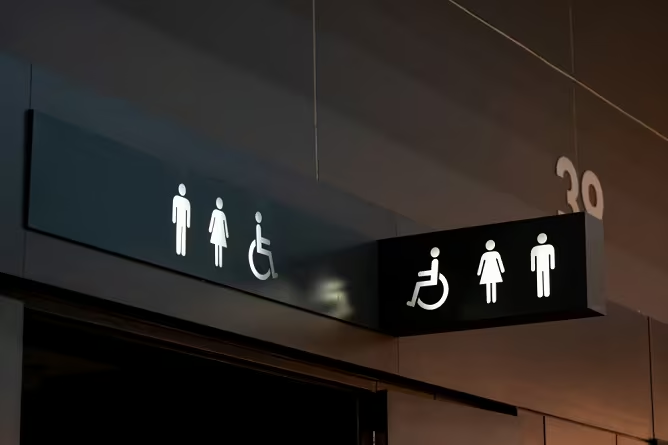
Why a Restroom Occupied Light Matters
A restroom occupied light can make a surprising difference in daily convenience.
Think about the last time you waited outside a restroom, unsure if it was empty.
That awkward knock on the door often feels unnecessary when a simple indicator could solve the problem.
These lights prevent confusion, save time, and add privacy in busy offices, restaurants, and even private homes.
I first noticed their importance while working in a co-working space with only two restrooms.
Every day, people shuffled uncomfortably in the hallway, knocking and guessing.
After the management installed a light system, the difference was immediate.
No more awkward waiting, no more false starts at the door—just a glance at the light told you everything.
Restroom occupied light systems combine practicality with subtle design.
They make restrooms more user-friendly, especially in high-traffic environments.
How Restroom Occupied Lights Work
At their core, these lights connect directly to the restroom’s locking mechanism.
When the door is locked, the system triggers a visible signal—usually red for occupied and green for vacant.
The technology can be as simple as a wired circuit or as advanced as a wireless sensor linked to smart building systems.
Some models tie into existing electrical panels, while others are standalone kits.
For electricians, the installation process is straightforward if wiring paths are accessible.
In older buildings, retrofitting may require creative routing to avoid damaging walls.
Types of Occupied Light Systems
Different spaces call for different approaches, and the technology adapts accordingly.
- Basic Indicator Lights
Small units placed above doors, perfect for offices or cafes.
These require minimal wiring and installation time. - Integrated Smart Systems
Connected to building automation systems, offering remote monitoring.
For example, facility managers can check restroom availability on a dashboard. - Custom Aesthetic Fixtures
Designed to blend with interior décor.
These lights often feature soft illumination rather than harsh red/green signals.
Real-Life Examples of Practical Use
I once worked on a project for a small theater.
During intermissions, long restroom lines formed quickly.
People wasted time trying door handles instead of queuing properly.
After the installation of an occupied light system above each restroom, the flow improved drastically.
Audience members appreciated the clarity, and the theater staff no longer had to redirect confused guests.
In another case, a modern dental office integrated smart occupied lights with their patient scheduling system.
When a restroom was vacant, the system displayed availability in the waiting room screen.
This subtle touch elevated the patient experience, making the practice stand out.
Installation Considerations
For anyone planning installation, a few factors should be kept in mind:
- Power Supply
Make sure the circuit load can handle additional fixtures.
In older buildings, electricians sometimes need to create a dedicated line. - Visibility
The indicator should be placed where people naturally look.
Above the door frame is most common, but in some layouts, a side-mounted light works better. - Maintenance
LED options last longer and reduce replacement frequency.
Choose fixtures with accessible housings for easy servicing.
Safety and Compliance Factors
Restroom lighting indicators aren’t just about convenience.
They also tie into accessibility and safety.
In public facilities, compliance with ADA standards requires clear, visible signals.
Emergency situations also benefit from indicators, helping staff know whether someone may be inside.
Some institutions even integrate occupied lights into emergency power systems.
That way, signals remain visible during power outages—a crucial step for hospitals or care facilities.
Alternatives to Traditional Locks
Conventional restroom locks have always been a hit-or-miss solution.
Some don’t clearly show if the room is occupied.
Others can fail or jam, leaving users embarrassed or frustrated.
Modern occupied light systems replace guesswork with certainty.
They also reduce unnecessary wear on door handles since fewer people tug on them.
For high-traffic areas like airports, this small upgrade adds noticeable efficiency.
Balancing Design and Functionality
Interior designers often worry about adding “industrial-looking” features to carefully styled spaces.
Thankfully, today’s restroom indicator lights come in sleek designs.
Minimalist lenses, soft diffused lighting, and even flush-mounted options ensure they don’t stand out awkwardly.
I’ve seen upscale restaurants integrate them seamlessly into wood panels, almost invisible until illuminated.
This approach keeps the polished look while offering the practical benefits.
Future of Restroom Occupied Light Systems
With smart technology on the rise, restroom indicators are evolving fast.
Imagine arriving at a large office and checking restroom availability from your phone.
Some companies are already experimenting with occupancy sensors linked to workplace apps.
This reduces wasted time and makes facilities more efficient.
As sustainability grows more important, energy-efficient LEDs and low-power sensors are becoming standard.
Future systems may even use wireless charging or solar panels for minimal wiring.
Final Thoughts
A restroom occupied light may seem like a small detail.
But anyone who has waited outside a restroom knows the frustration it solves.
From co-working spaces to theaters, hospitals to coffee shops, these systems add comfort, efficiency, and professionalism.
When installed thoughtfully, they enhance both user experience and building operations.
It’s one of those upgrades people barely notice—until they experience life without it.
Related posts:
 Electrical Services for Residential Renovations and Expansions
 How Skylights Increase Your Property Value
 How to Ensure Electrical Compliance in Temporary Work Environments
 Why Maintenance Neglect is the #1 Cause of Industrial Accidents
 How Franklin Electric Submersible Pumps Are Powering Reliable Water Systems in Modern Engineering
 Understanding Electrical Circuits Through Washing Machine Repair Nearby and Appliance Repair Clermont Case Studies
 Electrical Safety Tips For Households With Valuable Rugs And Carpets
 How Induction Heating Powers the Next Generation of High-Performance EV Batteries